Repair vs Replace Casement Windows in a Conservation Area
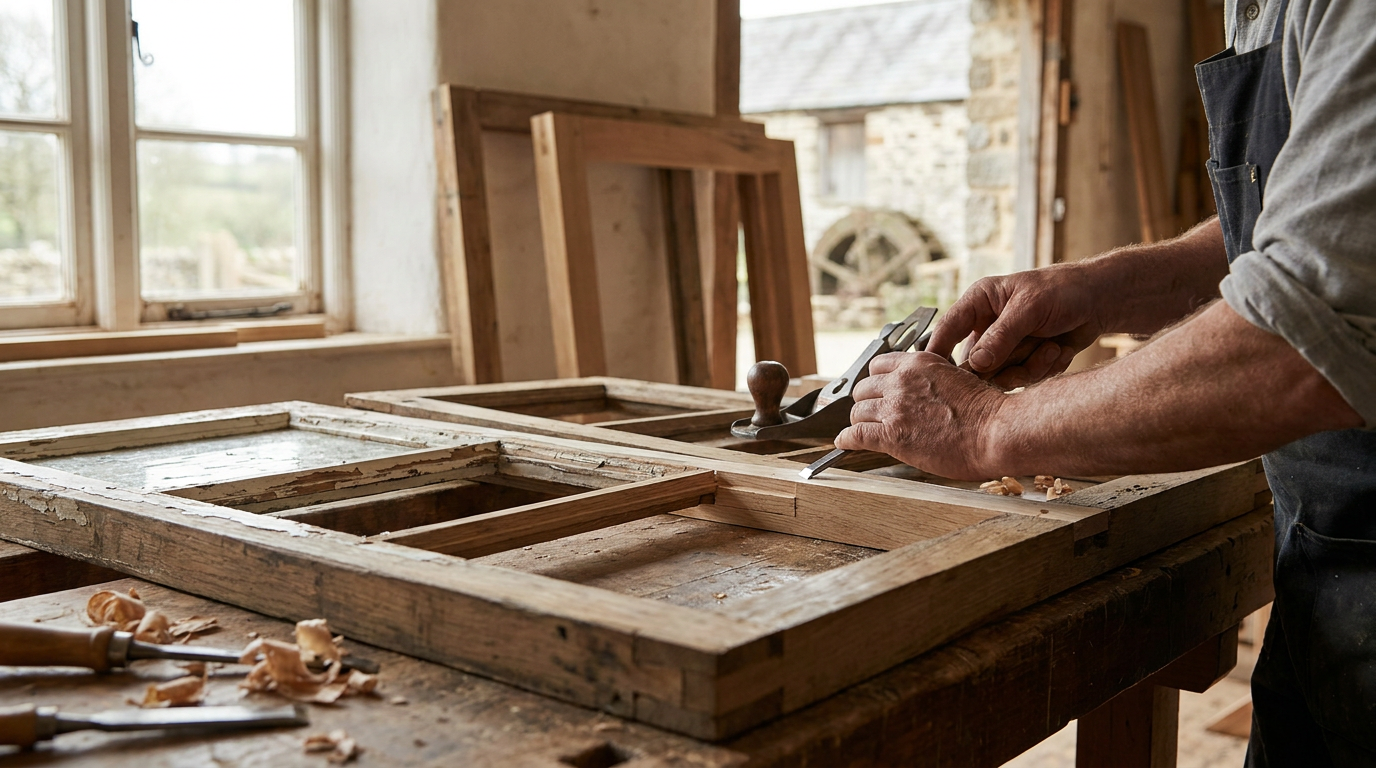
Quick answer: repair vs replace casement windows conservation area
Yes — repair is almost always the right answer when weighing repair vs replace casement windows conservation area decisions, because UK planning guidance actively favours like-for-like restoration of original timber frames.
If your casement windows are original to a Listed Building or sit within a designated conservation area, your local planning authority will expect you to repair rather than replace wherever the timber is sound enough to save. Full replacement is usually treated as an alteration that needs permission, and may be refused outright.
Do I need permission to replace windows in a conservation area?
Yes, in nearly every case you need planning permission to replace windows in a conservation area, and Listed Building Consent if the building is also Listed. Like-for-like repair of existing casement frames does not normally need permission, but any change to material, profile, colour, or opening method is treated as an alteration.
Unauthorised window replacement in a conservation area is a criminal offence. Local authorities can issue an enforcement notice requiring you to undo the work at your own cost, and fines or, in rare cases, custodial sentences can follow. Always contact your conservation officer before commissioning any new joinery.
Is it better to repair or replace a window?
Repair is almost always better than replacement for historic casement windows, because original timber frames were built from slow-grown, heart-grade timber that is difficult to source today, and because repair preserves the building's authentic character.
A well-made timber casement from the Victorian or Edwardian era can be expected to last 200 to 250 years with periodic maintenance, and most problems (rotted sills, perished glazing bars, failed joints) can be spliced or sectionally rebuilt without disturbing the rest of the frame. Replacement only wins when rot has compromised more than roughly 40% of the structural sections, or when earlier poor repairs have left nothing authentic to save.
What is the difference between a casement and a fixed casement?
A casement window is hinged on one side and opens outward (or occasionally inward) like a door, while a fixed casement is glazed directly into the frame with no moving parts.
This distinction matters in conservation terms because the method of opening is part of a building's historic character. If your original window is a side-hung casement, a like-for-like replacement must also be side-hung: you cannot substitute a fixed pane, a top-hung opener, or a tilt-and-turn unit without changing the building's appearance and function. Fixed casements are common where original openings were never intended to open (stairwells, gable lights, internal porches), and they are simpler to repair because there are no hinges, fasteners, or draught seals to maintain.
Practical next step
Before you commission any new joinery, ask your joiner to carry out a condition survey of the existing casement frames and submit it, together with photographs, to your local conservation officer for written pre-application advice. If you would like a craftsman's assessment from our Crossley Mills workshop near Holmfirth, send us the surveyor's report or a set of clear photographs and we will advise whether section repair or full replacement is the honest answer for your building.
Do I Need Permission to Replace Windows in a Conservation Area?
Yes, in most cases you need permission to replace windows in a conservation area. The general rule is that like-for-like repairs do not require an application, but full replacement of timber casement windows — even with identical-looking units — usually does, because the work alters the character of the building and its setting.
When planning permission and Listed Building Consent apply
Planning permission covers changes to a property within a conservation area, including the replacement of windows and doors. If the building is also a Listed Building, you need Listed Building Consent on top of planning permission, and the two applications are decided separately. Carrying out either without consent is a criminal offence, with penalties ranging from enforcement notices that order you to undo the work, through unlimited fines, to prosecution.
For Listed properties, the threshold is stricter still. Any alteration that affects the special architectural or historic interest — including changing window materials, glazing patterns, or opening mechanisms — needs consent, even if the new unit looks the same to a passer-by. Conservation officers look at profile depth, moulding shape, glazing bar dimensions, ironmongery, and the method of opening. Side-hung casements must stay side-hung, and a sliding sash must remain a sliding sash.
Article 4 Directions and like-for-like exceptions
Many local authorities have issued Article 4 Directions that remove permitted development rights within their conservation areas. Once an Article 4 Direction is in force, even repairs that would normally be allowed under the General Permitted Development Order — such as replacing decayed timber sections, fitting draught seals, or upgrading single glazing to slim-profile heritage double glazing — may need an application. Check with your local planning authority before any work begins.
The like-for-like exception still exists in most areas. If a casement window is rotten, you can splice in new sections of the same timber, in the same profile, with the same glazing, without triggering a full application. This is the approach we prefer at our Crossley Mills workshop: keep the original frame, replace only what has failed, and document every stage for your records.
Is It Better to Repair or Replace a Casement Window?
Repair is almost always the better answer when dealing with casement windows in a conservation area, because planning guidance actively favours like-for-like restoration over replacement and timber frames are built to be repaired rather than discarded.
Decision criteria our workshop uses before quoting replacement
Before we ever price a replacement, we run a simple triage on every casement we see at Crossley Mills. The test asks four questions, and any single "yes" usually rules out replacement.
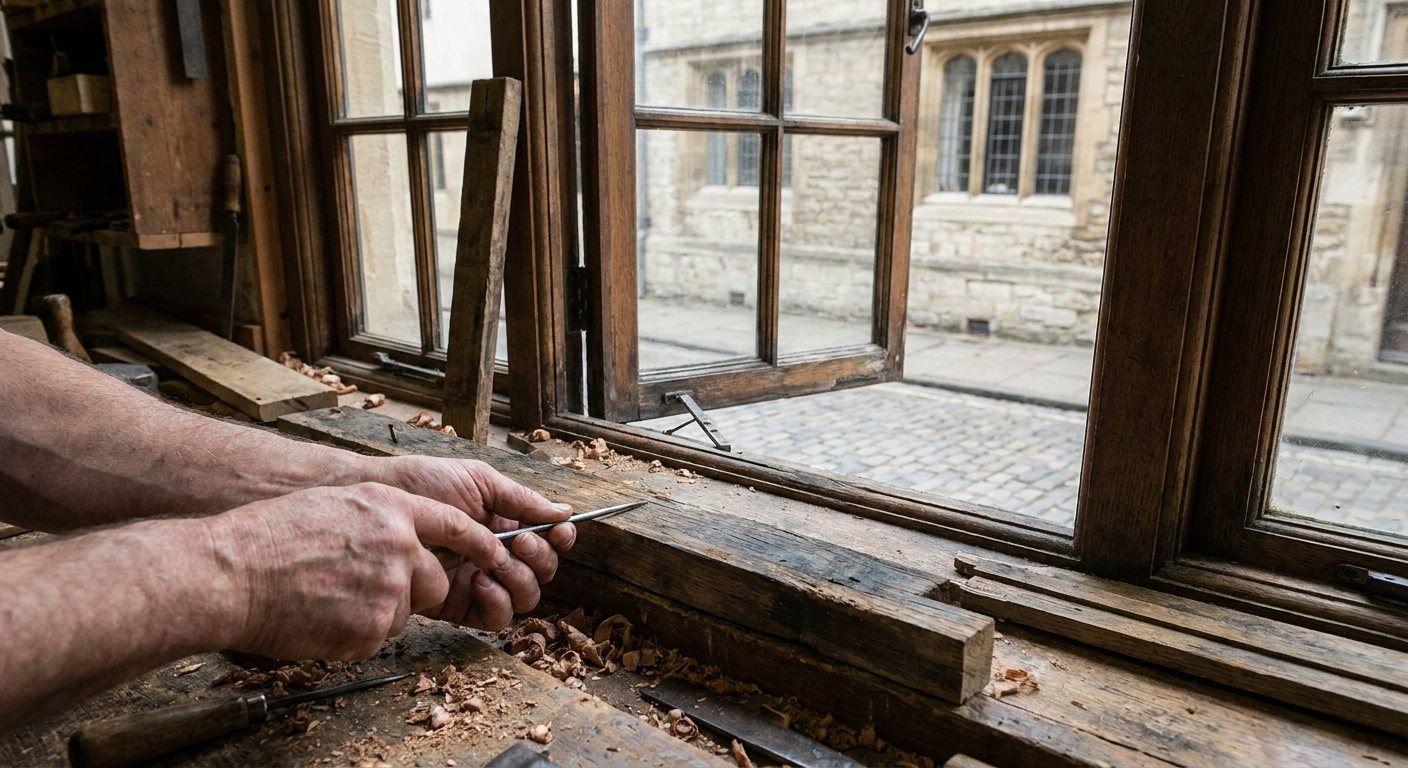
- Is the timber sound? We probe the cill, the bottom rail, and the meeting rails with a sharp awl. If less than roughly 30% of any section is rotted, a splice or new sill section will out-perform a new unit.
- Are the joints loose or just worn? Worn joints respond to re-pinning with hardwood dowels and traditional animal glue. Truly failed joints need a partial rebuild, not a full replacement.
- Is the glass original or historically interesting? Crown or cylinder glass, leaded lights, and early drawn sheet are irreplaceable on the open market and almost always survive a careful overhaul.
- Can draught-proofing close the comfort gap? A serviced casement with new seals, brush pile, and a slim-profile vacuum unit typically lifts the U-value from about 4.8 to around 1.4 without touching the external appearance.
If a casement passes these tests, repair keeps the original fabric, keeps Listed Building Consent applications simple, and keeps the character of the conservation area intact.
When full replacement becomes the honest answer
Replacement is the right call only when repair stops being honest. We see that moment usually after decades of neglect, and it shows up in four predictable ways:
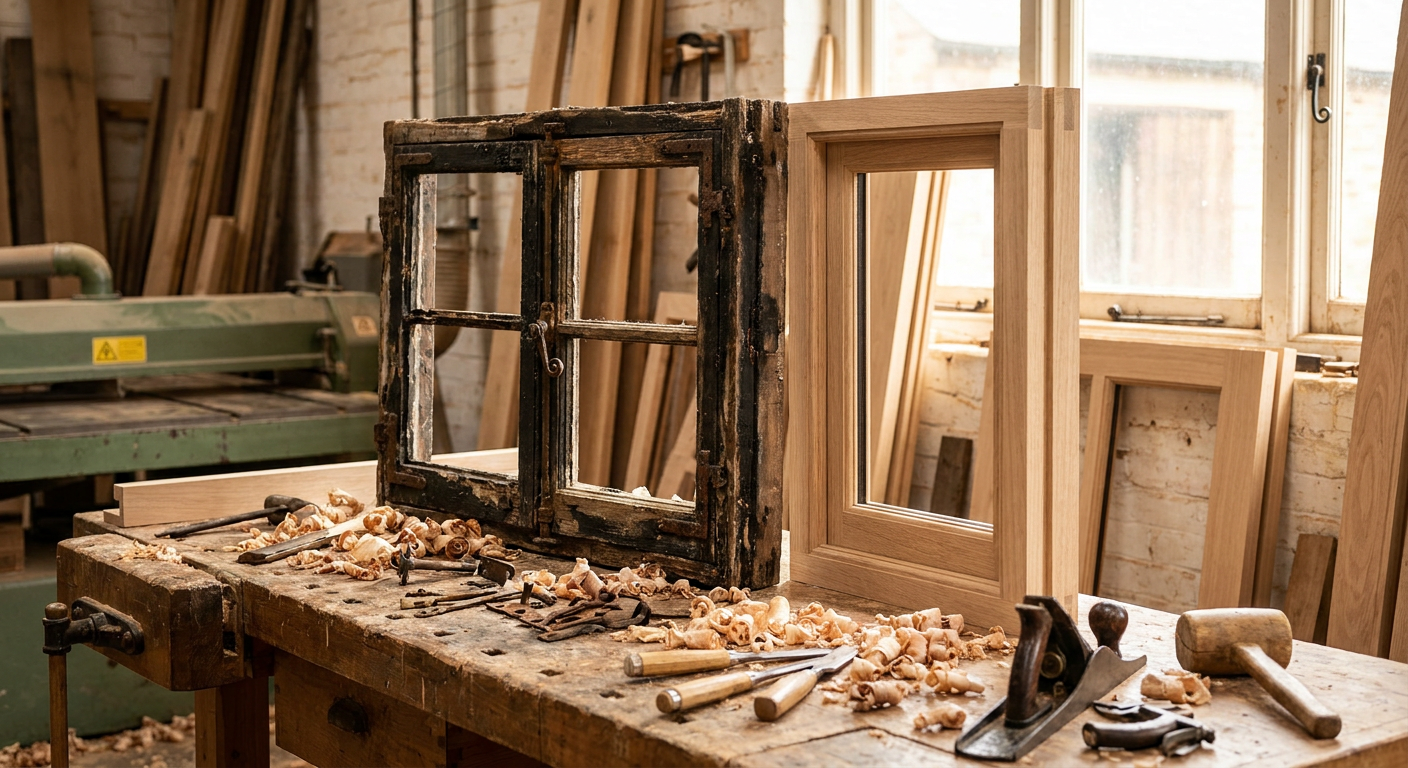
- More than half the frame is rotten. Once decay runs through the stiles, cill, and head, splicing becomes a patchwork that fails within a decade.
- Ironwork has corroded into the timber. Old strap hinges and shutter bolts fuse to the rails, and removing them destroys the surrounding wood.
- Previous repairs have replaced oversized sections. Layers of mismatched timber and modern fillers leave nothing original to anchor to.
- The window has been widened, blocked, or fitted with non-original glazing bars. The frame no longer reflects the building's history.
Even then, the replacement must match the original in profile, section size, timber species, mouldings, and method of opening. We have measured hundreds of period sections at the bench, and that archive lets us match a 1920s side-hung casement or a Victorian flush casement with the right FSC-certified or locally reclaimed timber.
The trade-off worth naming plainly: a faithful timber replacement costs roughly the same as a mid-range uPVC unit and lasts two to three times longer, but it takes longer to make and needs occasional repainting. Repair is slower again, yet it preserves the glass, the patina, and the planning consent position that the conservation area was created to protect. When you weigh repair vs replace casement windows conservation area choices, those long-term balances should carry the same weight as the initial quote.
Planning Permission, Article 4 Directions and Like-for-Like Rules Compared
What "like-for-like" really means to a conservation officer
Conservation officers use "like-for-like" as a shorthand for three matching qualities at once: profile, material, and method of opening. A side-hung casement must stay side-hung. A moulded ovolo staff bead must be replaced with another ovolo staff bead, not a chamfered modern bar. The timber species, the paint system, and the glazing bar arrangement all carry weight.
In our Holmfirth workshop we treat like-for-like as a working standard, not a marketing phrase. When a 1930s casement arrives with a decayed lower rail, we splice in English oak using a traditional scarf joint, then re-profile the section to match the original mouldings. That level of fidelity is what planning officers expect when they grant consent for a repair rather than a full replacement.
The trade-off is time. A faithful repair often takes longer than a fabrication job because each element is shaped by hand rather than machined in batches. The benefit is a window that reads as original from the pavement and survives another century of weather.
uPVC, aluminium and timber: how each is judged
uPVC casement windows sit at the bottom of most conservation officers' lists. The frames are extruded, welded, and foiled to imitate timber, but the joints, the sightlines, and the gloss finish betray them within a season. Replacement sections cannot be spliced on site, and the units typically fail at the hardware before the frame wears out. In most UK conservation areas, a uPVC replacement will be refused.
Aluminium fares better visually because sections can be slimmer and powder-coated in heritage colours. It carries no planning bar in itself, but officers still weigh it against the original fabric. A thermally broken aluminium casement in a 1905 cottage often looks too crisp, too new. Thermal performance is strong; authenticity is weaker.
Timber remains the benchmark. A well-made timber casement, kept painted and aired, can serve 200 to 250 years. Sections can be repaired, spliced, and re-glazed without disturbing the frame. For owners weighing repair versus full replacement in a conservation area, FSC-certified or locally reclaimed timber is almost always the path officers will support. Secondary glazing offers a useful middle ground here too, because it lifts the thermal performance of a repaired timber casement without changing the external sightline.
Common questions about repair vs replace casement windows conservation area
Do I need permission to replace windows in a conservation area?
Yes, in most cases you need planning permission or Listed Building Consent to replace casement windows in a conservation area. Like-for-like repair rarely needs consent, but full replacement almost always does, particularly where an Article 4 Direction removes permitted development rights. Your local planning authority decides the detail, and rules vary across the UK.
Is it better to repair or replace a window?
It is better to repair a historic window whenever the original timber is structurally sound and the failure is localised. Decay at the sill, lower rail, or meeting rails can often be spliced in with matching timber, keeping the original frame, glass, and mouldings intact. Full replacement is justified only when rot is advanced, the frame is beyond saving, or a change in opening arrangement is essential.
What is the difference between a casement and a fixed casement?
A casement window is a side-hung or top-hung timber frame that opens on hinges, while an fixed casement is identical in profile but is sealed shut in the opening. Fixed casements were commonly used in pairs or rows to bring light into hallways, stairwells, and upper storeys without creating a vent. Both share the same mouldings, glazing bars, and ironmongery, so a like-for-like repair must preserve the original proportions and sightlines.
Is window replacement a repair or improvement?
Window replacement is classified as an alteration or improvement, not a repair, in planning terms. Even fitting new double glazing into an existing frame is treated as a change to the building's fabric. By contrast, splicing in new timber sections, replacing cords and weights in sash windows, or adding discreet secondary glazing counts as maintenance or repair and is usually permitted without consent.
Planning permission requirements
You will need Listed Building Consent for any alteration to a Listed Building, and planning permission for most windows in a conservation area where an Article 4 Direction is in force. Submit drawings, photographs, and a written justification. Repair work is the safest route to approval, and many officers will refuse replacement with uPVC outright.
Article 4 Direction restrictions
An Article 4 Direction withdraws permitted development rights, meaning even a like-for-like replacement of timber casements needs permission. It often covers cladding, doors, and roof materials too, so check before commissioning any work. We have seen projects where owners replaced windows only to face enforcement when the rooflight changes next door were flagged.
Repair vs replacement decision criteria
Use this workshop rule of thumb: probe the lower rail and sill first with a thin knife. If the timber resists and rot is surface-only, repair. If the blade sinks and the section crumbles, splice in new timber. Only when three or more major components fail do we recommend full replacement, and even then in matching timber, not uPVC or aluminium.
Practical Next Steps and Frequently Asked Questions
How to commission Historic Joinery Yorkshire
Begin with a site visit or a detailed photo survey sent to our Crossley Mills workshop near Holmfirth. We assess each casement frame in person where possible, identify rot in sills or lower rails, and discuss whether a like-for-like timber repair, a partial component rebuild, or a sympathetic replacement suits the building. From there, Daniel Fitzpatrick prepares a written scope, a fixed quotation, and a lead time — current workshop bookings typically run 8–12 weeks.
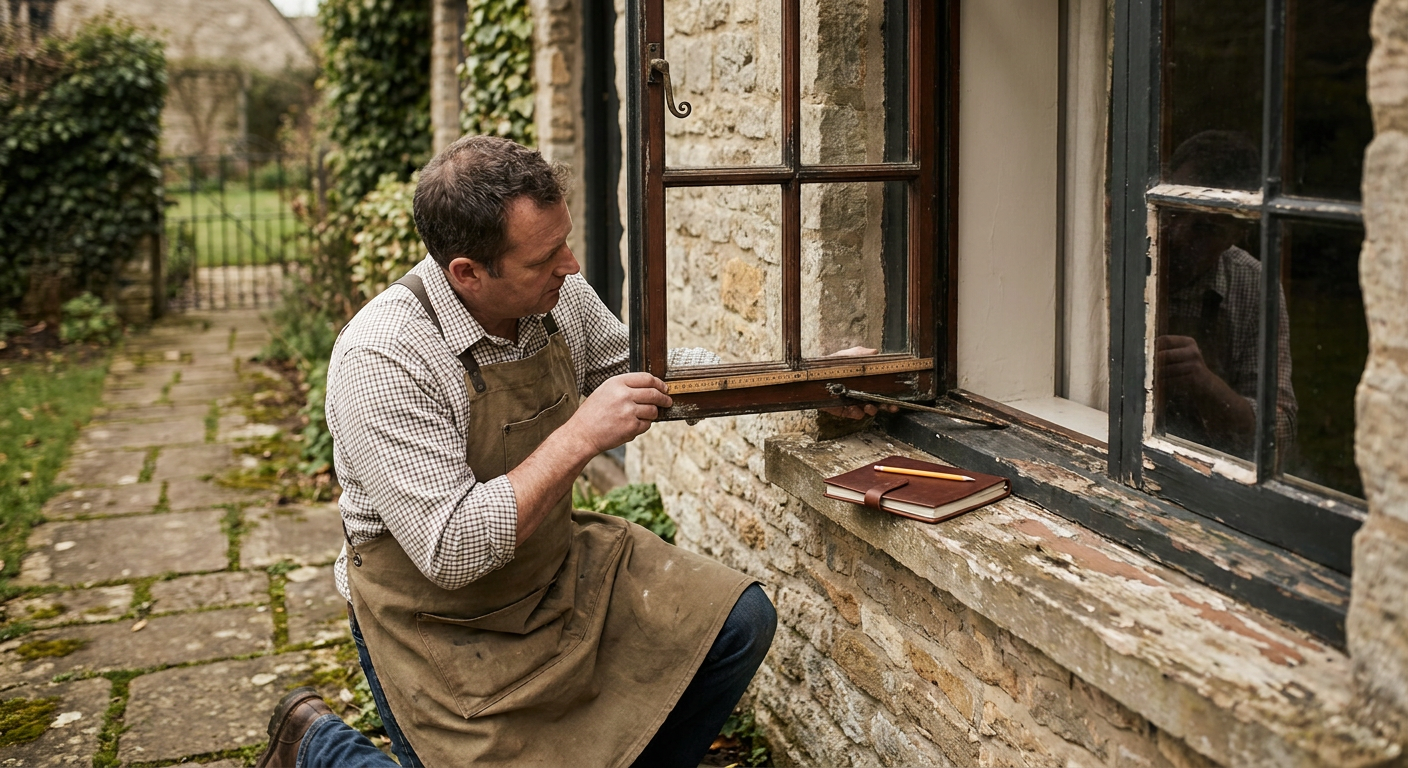
We work with conservation officers, Listed-building owners, and heritage architects across the UK. Every commission uses FSC-certified or locally reclaimed timber, hand-executed joinery, and traditional paint finishes. You can expect CAD drawings for approval before any cutting begins, and regular photo updates during production.
Do I need permission to replace windows in a conservation area?
Yes, in most cases you need planning permission or Listed Building Consent to replace casement windows in a conservation area. Like-for-like repairs using matching timber profiles usually do not, but full replacement triggers consent because it alters the building's appearance.
Is it better to repair or replace a window?
Repair is almost always better when the original frame is sound, because it preserves historic fabric, avoids consent hurdles, and typically costs less than a mid-range replacement. A well-maintained timber casement can last 200–250 years, so targeted work on sills, glazing bars, or ironmongery often restores performance without losing the original.
What is the difference between a casement and a fixed casement?
A casement window is hinged on one side and opens outward or inward, while a fixed casement has no hinges and cannot be opened. Fixed casements are common in upper lights or where ventilation is handled elsewhere; opening casements provide airflow and emergency egress in line with building regulations.
Is window replacement a repair or improvement?
Planning law treats window replacement as an alteration, not a repair, even when the new unit improves thermal performance. That classification is what triggers the need for consent in a conservation area or on a Listed Building, and why conservation officers expect you to demonstrate that repair was not feasible before approving a replacement.
Retrofitting and working with your conservation officer
Vacuum double-glazing and slim-profile secondary glazing offer the strongest case for retrofitting into existing timber frames, because they add thermal performance without altering the external appearance seen from the street. When replacement is unavoidable, present your conservation officer with a like-for-like timber specification, matched glazing bars, and traditional ironmongery. Submit early, share your repair survey, and respond to comments with revised drawings rather than arguments.
Next step: Send us photographs and measurements for a no-obligation assessment of your casement windows.
Sources
- Replacing Windows in a Conservation Area | Gowercroft Joinery
- Conservation area windows | Restoration of windows in Conservation area
- [PDF] Maintenance, Repair and Restoration
- Replacing Windows in a Conservation Area
- Casement Windows-help identifying maker and repair or replace? - Fine Homebuilding
- Historic Window Replacement: A Complete Guide | Marvin
- Windows of Opportunity: Repair - Don't Replace - Those Older Wood Windows
- Restoring vs Replacing Windows: Cost Comparison - Facebook